
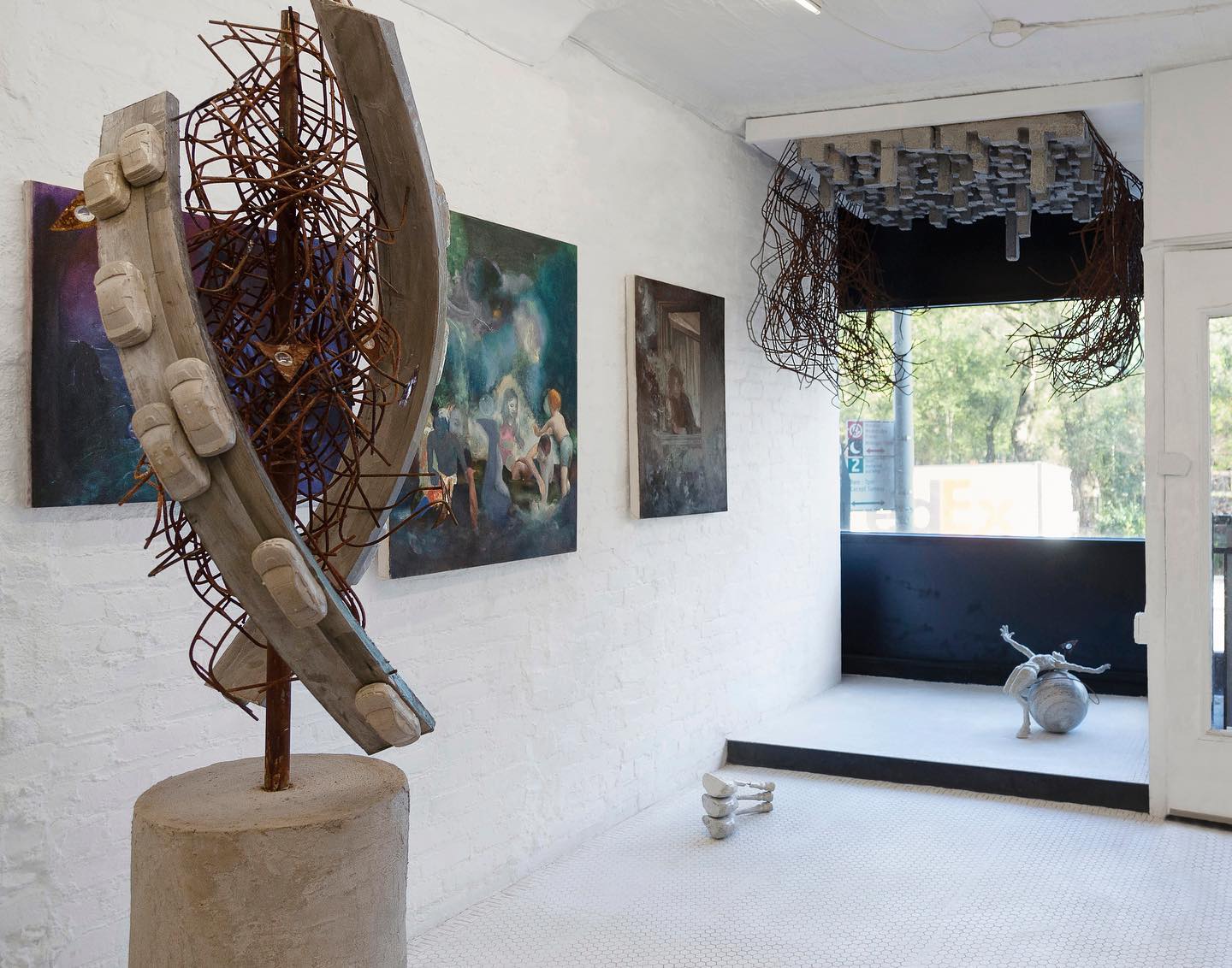
Pooneh Maghazehe
Double Zero · -0%-0%-0%-0%
September 8 - October 21 · Opening 8 September, 6-9pm
In Pooneh Maghazehe's work, we see various sets of twins, both split and duplicated. Halved bodies remain in concert, doubled visages lead parallel lives. They are a complicated family. However, her form of twinning is not biological, but more akin to a kind of historical and psychological orthopedics: doubling, cutting, and salvaging without predetermined destinies.
Twins caused anxiety for both ancient and pre-modern societies and were often explained through polarities of wonder or horror. They became the bearers of dichotomous creation, as well as instillers of ambiguity, and the guardians of fragile humans, as if they were extra-ordinary. Perhaps the most famous historical set of twins are Castor and Pollux, half-twin brothers of myth, immortalized in the constellation Gemini as well as through various sculptures, paintings, and drawings.
Altogether, they describe a mythography and symbology that connects them with sailors, horses, and war. The brothers came to help those in need, or in dire straits. Maghazehe's horses are not calm and victorious like Castor and Pollux, they are heaving, frothy, and hissing. They are duplicates, cast from the same mold, but then changed and remade, becoming like the stories they tell: conflicted.
Like Gothic grotesques, Maghazehe's animals are charged with expressive excess, but their symbolic presence is nearly inverted. Animals became conduits for various traits associated with their better and worse selves. Maghazehe uses animals to oppose the nature we artificially gave them, the essences we invented for them and then naturalized.
A conversation, Framing Pooneh Maghazehe with William Corwin, sat beside this hang. The checklist and image set lived under their original paths on the live site; this page keeps the press text readable without Squarespace scripts.